

REPORT
Thirty-six years after German reunification, the divide between East and West remains striking. To mark the publication of the Greek edition of his book “Unequally United”, sociologist Steffen Mau joined audiences in Athens and Thessaloniki for a series of discussions on identity, inequality, the crisis of political representation and the rise of the far right in Germany and across Europe.

Beyond a few remaining sections of the Berlin Wall and the souvenir badges sold to tourists by street vendors, what remains today of East Germany's forty-year history? A walk through present-day Berlin suggests that much of this past has largely faded from public memory. It survives mainly as a reminder of the Cold War and communist dictatorship, as a tourist attraction, or as a marginal form of nostalgia. But what does this mean for those who lived in the German Democratic Republic (GDR), or whose families did, a state that represented one of the two equally legitimate German states that emerged after the Second World War?
The reunification of Germany in 1990 was not a merger between equals. The prevailing assumption was that everything in the East would have to change, while the West would largely remain untouched. Yet can a collective identity simply be erased by political decree? And what happens when that identity re-emerges, demanding recognition in ways that profoundly shape contemporary political life?
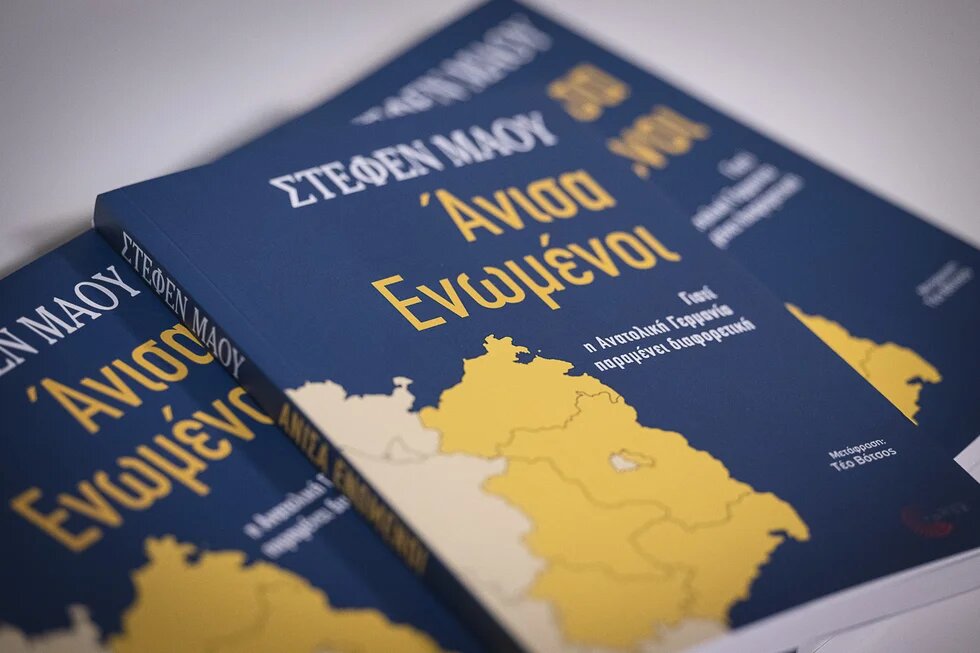
These questions lie at the heart of Unequally United: Why East Germany Remains Different, the latest book by sociologist Steffen Mau. Recipient of the In_equality Research Award 2026 and described by the Frankfurter Allgemeine Zeitung as "the most prominent researcher of German society", Mau examines the economic, social, demographic and political inequalities that continue to shape Germany more than three decades after reunification. His book seeks to explain why eastern Germany has remained distinct and why these differences continue to matter.
A book for all contemporary societies
Originally published in German as Ungleich vereint. Warum der Osten anders bleibt (Suhrkamp, 2024), the book was first presented to Greek audiences at the 2025 Thessaloniki International Book Fair, where it sparked discussion about the relationship between social inequality, political representation and the rise of the far right.
Recognising that the book's findings extend well beyond the German context, the Heinrich Böll Foundation Thessaloniki Office, together with the Goethe-Institut, supported its publication in Greek by Topos Editions, translated by Theo Votsos.
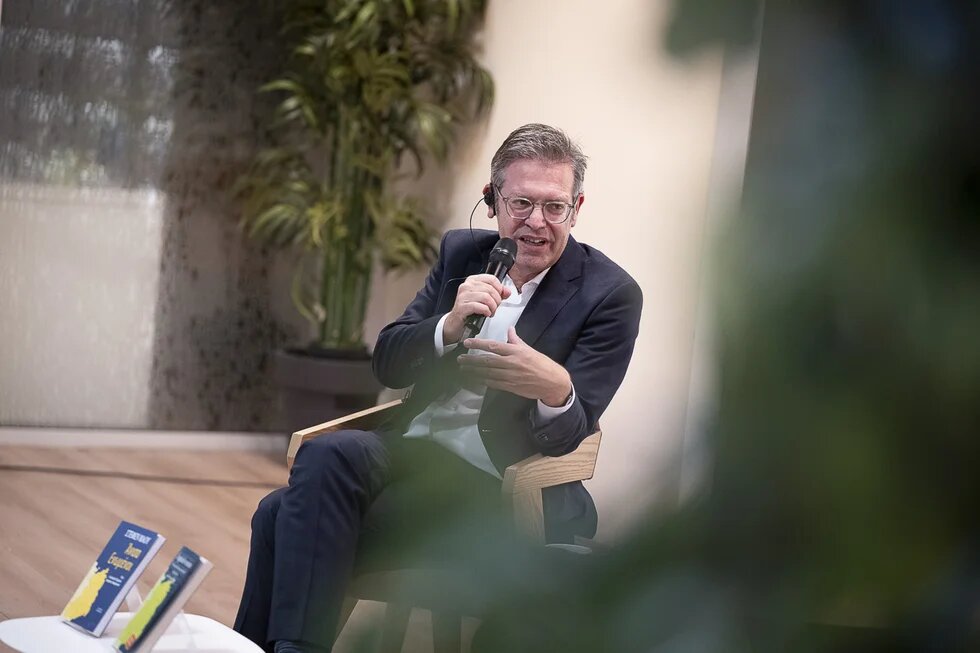
To mark the release of the Greek edition, Steffen Mau visited Greece from 20 to 22 October 2026 for a series of four public events and discussions. The programme included two open events at the Goethe-Institut Athen and the Goethe-Institut Thessaloniki, as well as meetings with students at the German School of Athens and the German School of Thessaloniki. The students had prepared questions through school history projects and history clubs. Public interest proved remarkable. All four events attracted large audiences, confirming that the issues explored in the book are closely linked to the current state of European Democracy.
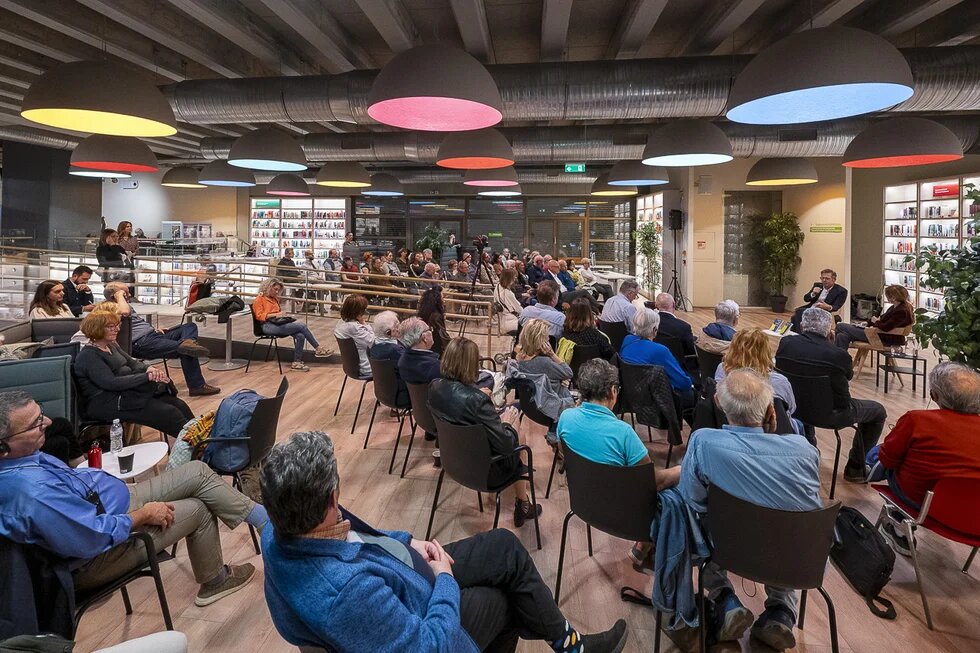
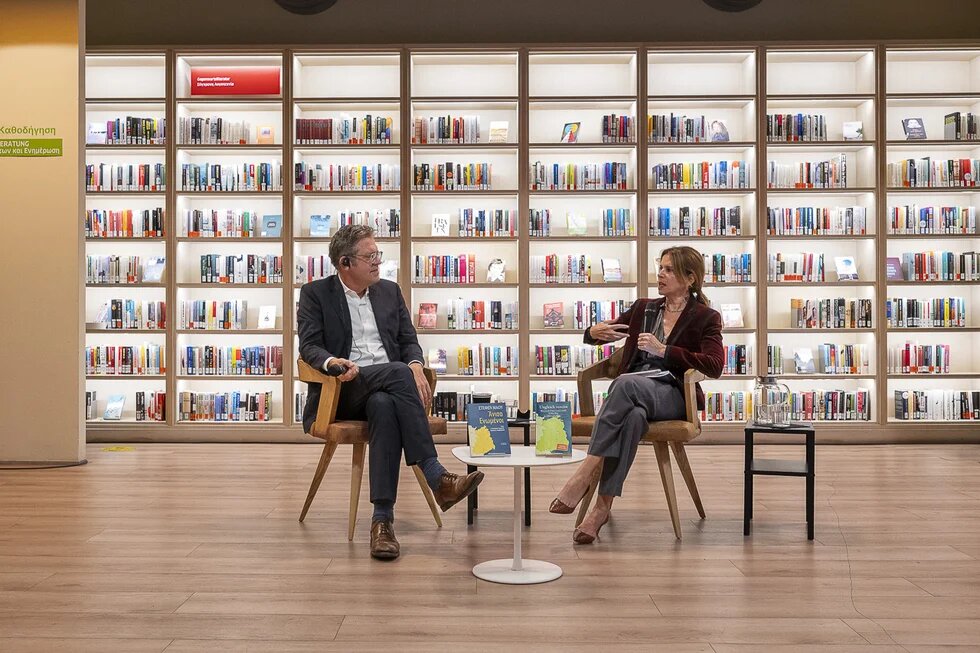
The discussions took place only a few days after the regional election in the eastern German state of Saxony-Anhalt, where the far-right Alternative for Germany (AfD) once again achieved a striking electoral result, sending shockwaves through the political landscape. It was therefore unsurprising that much of the discussion focused on the rise of the far right and the factors driving its success. This was also the point of departure chosen by the moderators in Athens and Thessaloniki, journalists Xenia Kounalaki and Kaki Bali.
The factors of an incomplete union
During the discussions, Steffen Mau argued that one of the central assumptions underlying reunification had ultimately proved indeed wrong. For decades, it was widely believed that the differences between East and West would disappear within one or two generations. Yet social structures have proved far more resilient than many expected. Economic disparities, family structures, cultural experiences and political attitudes have not only persisted but, in some cases, become entrenched.
As Professor Mau explained, eastern Germany continues to lag behind the western states in terms of income, wealth accumulation and representation in leadership positions, while also facing significant demographic challenges. The region lost a substantial share of its population after 1990, and the departure of many young and highly educated women to western Germany contributed to what Mau describes as a process of "demographic masculinisation". In many areas, those who remained were predominantly men with fewer qualifications and limited access to new economic and social opportunities. It is no coincidence, he noted, that younger men now constitute one of the AfD's most important social constituencies.
Identity is equally central to Mau's analysis. Following reunification, East German identity was widely assumed to be a temporary phenomenon that would gradually disappear. Instead, the opposite occurred. Many East Germans continue to feel that they are treated as second-class citizens and that their historical experiences have never been fully recognised. The AfD has successfully capitalised on this sense of marginalisation, presenting eastern Germany not as a problem to be solved but as a political trailblazer whose concerns were ignored for too long.
One of the most thought-provoking aspects of the discussion concerned political representation. According to Steffen Mau, mainstream political parties have become increasingly detached from the everyday concerns of many citizens. The AfD, by contrast, has invested systematically in maintaining a visible presence within local communities, including small towns, villages, associations and community events. Its success is not only a product of its political programme but also of its ability to cultivate a sense of proximity and engagement.
"Political climates can change very quickly"

The discussion in Thessaloniki was further enriched by two interventions concerning the state of democracy.
Tatiana Liani, lecturer in the Department of Theatre Studies at Aristotle University of Thessaloniki, raised the question of whether current developments bear any resemblance to aspects of the Weimar Republic, when the gradual erosion of democratic institutions paved the way for Nazism. Mau acknowledged certain troubling parallels, particularly the weakening of the political centre, the spread of verbal hostility and the shifting boundaries of acceptable public discourse.
At the same time, he stressed the need for caution when drawing historical comparisons. Contemporary Germany possesses robust democratic institutions, while key economic and social actors do not support the far right as they did during the 1930s. Nevertheless, he warned that history demonstrates how rapidly political climates can change when social crises, political dissatisfaction and declining trust in institutions converge.
For her part, Anthi Wiedenmaier, Associate Professor in the Department of German Language and Literature at Aristotle University of Thessaloniki, highlighted the challenges facing young people in Greece, including long-term unemployment, underemployment, emigration and growing difficulties in accessing affordable housing. Mau noted that these concerns are far from unique to Greece and reflect the experiences of many young people across Europe. When societies are unable to offer security, prospects and opportunities for social mobility, frustration, resentment and distrust towards democratic parties are likely to grow.

As the discussions repeatedly demonstrated, East Germany is not just German case. Rather, it provides a valuable lens through which to understand broader global developments: inequalities between centre and periphery, feelings of neglect experienced by certain social groups, the crisis of political representation and the growing appeal of political forces that openly challenge liberal democratic norms.
|
|
Watch the full recording of the event held on 20 October 2026 at Goethe-Institut Athen.